Let's talk Bluey in the classroom

JULY 2026 EDITORIAL
Beyond the Screen: Rethinking Transitions in the Modern Classroom
The Bluey Paradox
One of my favorite things about watching childcare vlogs is that they remind me what this work actually looks like.
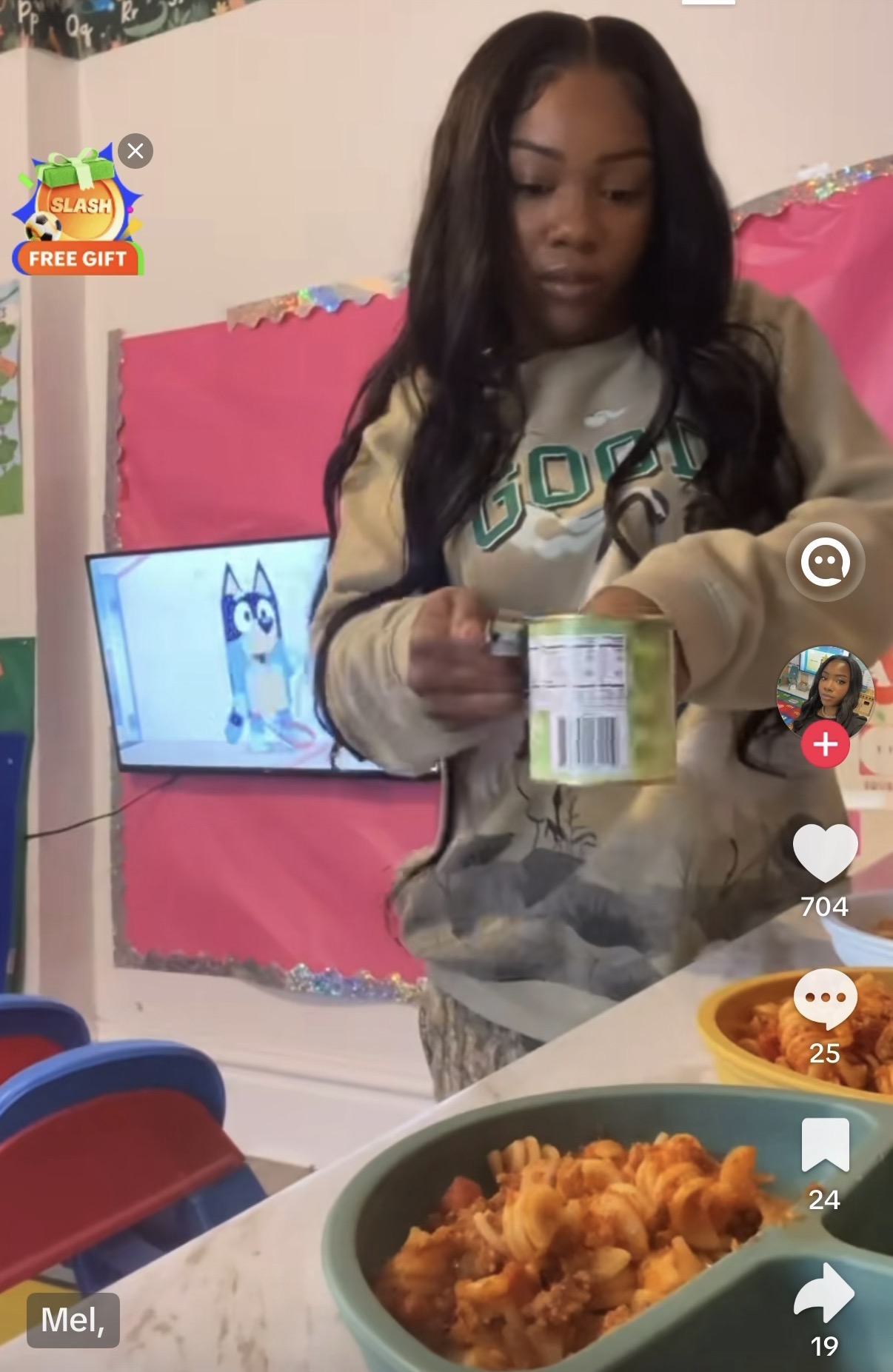
The other day, I came across a TikTok from a home childcare provider.
She was preparing lunch...carefully portioning pasta, green beans, and orange slices onto each child's plate. I'm not gonna lie, for some reason I was hooked 😂 SO invested in lunch prep lol.
Then I noticed something in the background.
There was a TV.
The children were watching Bluey.
And suddenly, something clicked.
Not because Bluey was wrong (I think Bluey is a wonderful show).
What struck me was something much more valuable.
I wasn't watching someone "use screens."
I was watching a teacher solve a problem.
Here's why I think those are two completely different stories.
When people debate screen time in early childhood education, the conversation usually starts with one question:
"Should teachers use screens?"
But that TikTok wasn't really about screens as much as it was about labor. Hear me out:
One adult.
Multiple responsibilities.
A non-negotiable task.
The question wasn't:
"Should I put on Bluey?"
The question was:
"How do I safely prepare lunch while supervising children?"
I think those are radically different questions.
Let's slow that moment down.
She was:
Supervising children
Preparing food
Portioning meals
Maintaining hygiene
Keeping everyone safe
Staying on schedule
Every one of those responsibilities mattered.
She couldn't stop preparing lunch.
She couldn't ask another teacher to step in.
There wasn't another teacher.
So she made a tradeoff.
Bluey became temporary support while she completed another essential responsibility.
What some might see as laziness, I clearly see as systems design under constraint.
Here's what I find fascinating.
She was simply doing what thousands of childcare providers probably do every single day.
And that's why I think moments like these are so valuable.
When we interview educators, they tell us what they believe.
When we quietly observe their work, we see what actually happens under real-world constraints.

We spend a lot of time debating whether media belongs in early childhood classrooms.
But maybe the more interesting question is this:
If media is already supporting these moments...why aren't we designing it specifically for them?
Imagine if the content wasn't just "something to put on."
Imagine if it was intentionally designed to:
Last exactly until lunch is ready.
Help children prepare for the next routine.
Gradually lower energy instead of ramping it up.
Cue children toward handwashing and mealtime.
Transition attention back to the teacher when it's over.
Not replacing relationships. Supporting them.
Because every minute a teacher spends searching for "something that might work" is a minute they aren't connecting with children.
The goal isn't more screen time.
The goal is more intentional support during the moments when educators temporarily can't do everything at once (and when expecting them to can send them packing).